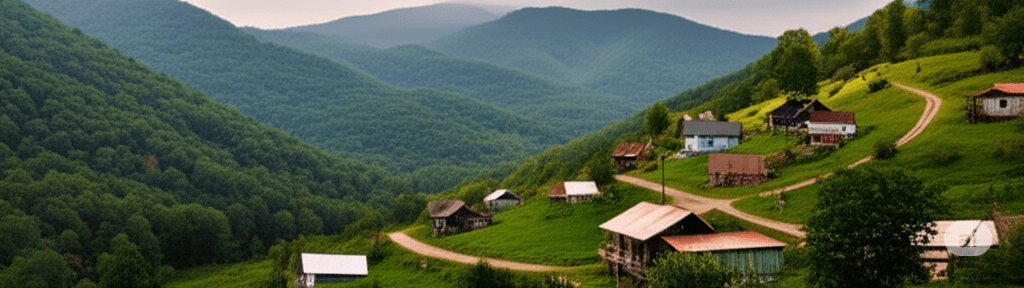
You can drive the roads through these mountains a hundred times and still not see the real Appalachia. The true hollers, the bone-deep stories, the quiet struggles—those aren’t found in welcome centers or roadside overlooks. They’re tucked away, miles from four-lane highways, hidden behind rusted gates, dirt paths washed out every spring, and porches where people still shell peas and wave at strangers like they know you.
The real Appalachia isn’t a tourist stop. It isn’t Dollywood or a fall foliage festival. It’s a place where folks know the sound of their neighbor’s truck without looking out the window. A place where pride and poverty live under the same roof, and dignity doesn’t depend on a bank account. Where people bury their dogs on family land and remember them like kin.
This place raised generations on biscuits and bacon grease, on well water and hand-me-downs, on hard work and harder winters. Grandfathers built houses with rough lumber they cut themselves. Grandmothers kept the same jar of bacon drippings by the stove for thirty years and used it like gold. Kids walked to school in the snow because missing a day wasn’t an option. Folks didn’t run to the doctor for every scratch. They used coal oil, tree bark, chewing tobacco, or whatever their granny told them to use. And somehow, they lived through it.
The real Appalachia is full of people who don’t ask for help unless they truly need it, and even then they’ll try everything else first. You’ll never hear about the man who repairs his neighbor’s roof every summer, even though he’s got arthritis in both hands. Or the woman who bakes ten loaves of bread each Saturday and drives them to the homes of older folks who don’t get out anymore. Those things don’t make the news. But they’re more real than anything you’ll ever find online.
These mountains hold grief too deep for words. Stories that never made it out. The mines that collapsed and swallowed fathers, the babies buried behind churches, the sons who left and never came back. But you won’t hear folks talk about all that unless you’ve earned a seat at their kitchen table, and even then, some stories stay between the cracks of old wood floors.
People here are not simple. They’re not backwards. They’re not stuck in the past. They’re careful. They’ve been talked about, written about, judged and studied. Outsiders have taken pictures of their broken-down porches, then driven off and published those photos like they captured something meaningful. But they missed it entirely. They didn’t see the hands that built that porch. Or the hands that held on to it when the wind blew hard and the world felt like it might fall apart.
In real Appalachia, there’s a rhythm to things. A way to do and not do. You don’t show up uninvited. You don’t brag about money. You don’t make fun of where someone lives, even if the roof sags and the weeds are knee-high. You treat people like they matter because they do, even if nobody else in the world seems to notice.
You’ll never really know this place unless you’ve watched someone kill a hog and say a prayer before they do it. Or held hands in a one-room church while the preacher cried and nobody judged him for it. Or watched a mother give her last jar of home-canned beans to a neighbor without thinking twice. There’s no charity here, just folks taking care of each other the only way they know how.
The real Appalachia isn’t romantic or tragic—it’s both, and neither. It’s muddy boots by the door and dishes in the sink. It’s burn barrels in the yard and gospel on the radio. It’s people sitting on tailgates, sharing stories they’d never say indoors. It’s boys who learn how to drive a stick shift before they learn algebra, and girls who know how to gut a fish before they ever wear makeup.
It’s also changing. The old folks are dying off, and with them go recipes no one wrote down, songs no one recorded, and cures no one believed in until they worked. Dollar Generals sit where general stores used to be. Meth has taken root in places where tobacco once grew. Kids move away and don’t come back, and you can’t blame them, but it still stings.
Still, something stubborn survives here. Maybe it’s the way the mountains hold things in place. Or maybe it’s the people who refuse to quit even when everything tells them to. They’ll plant a garden next spring no matter what the winter brings. They’ll keep driving their rusted trucks until the wheels fall off. They’ll keep showing up for each other, funerals and floods alike, no need to be asked.
This place isn’t a myth, though it’s been treated like one. It’s not an idea. It’s not something you can capture with a photo or bottle up in a souvenir jar of apple butter. It’s not quaint, it’s not picturesque. It’s alive. Bruised, breathing, and unshakably real.
So if you ever find yourself deep in these mountains, and someone invites you to sit a spell—don’t just take a picture and move on. Stay. Listen. You might not understand every word, and that’s alright. What matters most isn’t spoken, anyway. What matters is felt—in the silence between sentences, in the weight of old stories, in the way someone hands you a plate of food like you’ve always belonged.
You’ll never find that in a brochure.
-Tim Carmichael
 Echoes of Appalachia
Leave a comment