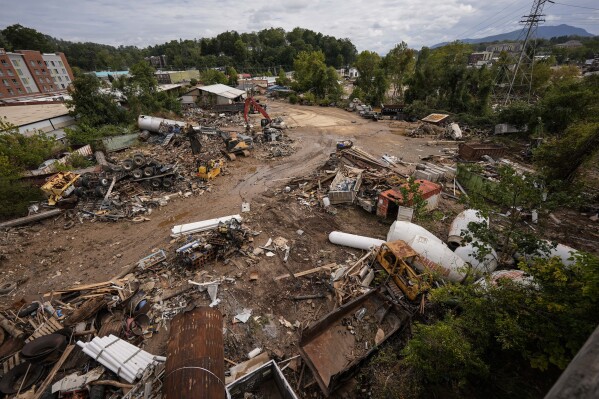
Nearly six months after Hurricane Helene’s catastrophic path through western North Carolina and East Tennessee, not a single home has been officially rebuilt in the hardest-hit areas, highlighting the sluggish pace of long-term recovery despite billions in promised federal aid.
The Federal Emergency Management Agency (FEMA) has distributed $402.5 million to over 157,000 families across North Carolina for immediate relief needs like temporary housing, rental assistance, and initial debris removal. This funding has primarily addressed urgent short-term needs rather than permanent rebuilding solutions.

However, the substantial funding required for comprehensive rebuilding efforts remains caught in bureaucratic limbo. In January, the Department of Housing and Urban Development (HUD) announced an allocation of $1.4 billion in disaster recovery funds to North Carolina for housing reconstruction, infrastructure repair, and affordable housing development.
A separate $225 million block grant earmarked for Asheville during the final days of the Biden administration now faces uncertainty under the Trump administration, which has demanded the city modify its implementation plan. The administration specifically objected to a proposed small-business program that would prioritize minority- and women-owned businesses, threatening to withhold the funds unless changes are made.
In Tennessee, six counties bore the brunt of Helene’s wrath: Washington, Carter, Unicoi, Johnson, Greene, and Cocke. The mountain communities in these areas face particular challenges due to their remote locations and the extensive damage to critical infrastructure.
Tennessee recently announced a state-level supplemental recovery program allocating $50 million to bridge gaps in federal funding, particularly for homeowners without flood insurance who don’t qualify for certain federal programs.
Transportation infrastructure continues to see incremental progress. On March 1, Interstate 40 reopened near the Pigeon River Gorge in North Carolina, restoring a vital transportation link that had been severed since the hurricane. The reopening required extensive engineering work to stabilize mountainsides and rebuild completely washed-out sections of the highway. On Friday, March 14, the Tennessee Department of Transportation (TDOT) announced the reopening of State Route 81 in Washington and Unicoi counties, another critical connection for rural communities that had been impassable for months.

Historic flooding in Asheville’s River Arts District destroyed dozens of artists’ studios and galleries, dealing a significant blow to the region’s cultural economy. Community organizations have established emergency grant programs for affected artists, but these provide only minimal support compared to the losses sustained.

The sluggish pace of recovery mirrors patterns seen after other major disasters, where immediate relief arrives relatively quickly but long-term rebuilding funds can take years to fully materialize. After Hurricane Maria hit Puerto Rico in 2017, some communities waited more than four years before significant rebuilding projects began.
As mountain communities enter the spring season, concerns about additional rainfall on unstable slopes have emergency management officials on high alert. Several areas remain under geologic monitoring due to the risk of landslides, further complicating rebuilding efforts in certain neighborhoods.
What’s most troubling for residents is that political fights are delaying their recovery. While roads are being fixed, thousands of families still have no permanent homes to return to. The storm hit everyone equally, but the recovery seems to depend on political decisions made hundreds of miles away. Six months later, storm victims are still waiting in temporary housing while officials argue over how money should be spent. It shouldn’t take this long to start rebuilding people’s lives after a disaster.
-Tim Carmichael
 Echoes of Appalachia
Leave a comment