
In the spring of 1932, atop the majestic Lookout Mountain at the Georgia-Tennessee border, a unique attraction quietly opened its gates to the public for the first time. Few could have predicted that this natural wonder, transformed by vision and entrepreneurship, would evolve into one of the South’s most enduring tourist destinations.
The story of Rock City begins long before its commercial opening. In 1823, missionary Daniel S. Butrick documented his discovery of what he described as a “citadel of rocks” — an extraordinary natural formation where massive boulders created what appeared to be “streets and lanes” along the mountain ridge. This geological marvel quickly earned the nickname “Rock City” from adventurous travelers who braved the difficult terrain to witness its splendor.
However, it wasn’t until the 1920s that Garnet and Frieda Carter recognized the untapped potential of this natural wonder. The husband-and-wife team owned property on Lookout Mountain, and while Garnet focused on developing a residential community called Fairyland, Frieda turned her attention to the wild, boulder-strewn landscape nearby.
For four years, Frieda devoted herself to creating accessible pathways through the rugged terrain. With remarkable determination, she ventured into the wilderness daily, unspooling string behind her to mark potential trails. Her creative touch transformed the natural setting into an enchanted garden, incorporating elements from European folklore by strategically placing her collection of German gnome figurines throughout the property.
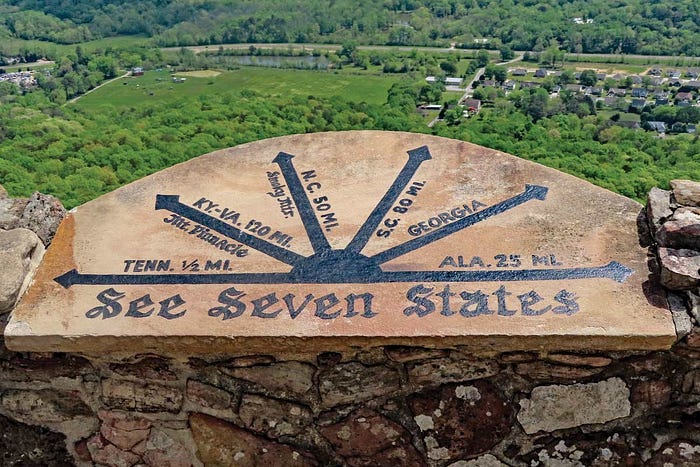
When Rock City Gardens officially welcomed its first visitors in 1932, the attraction faced significant challenges. Its remote mountaintop location, miles from any major highway, meant that initial attendance was modest at best. The Great Depression further complicated their business prospects, as few Americans had disposable income for recreational activities.
Faced with these obstacles, Garnet Carter conceived what would become one of the most brilliant marketing strategies of the 20th century. He hired sign painter Clark Byers to travel across the American countryside with an unusual proposal for farmers: free barn painting in exchange for advertising space. The simple yet compelling message “See Rock City” would be emblazoned across barn roofs in bold, unmistakable letters.
This grassroots marketing campaign grew exponentially over the following three decades. Byers and his crew ultimately painted nearly 900 barns across multiple states, stretching from Michigan to Texas, with strategic concentration along routes commonly traveled by Northern “snowbirds” heading to Florida. These distinctive black and white messages became an integral part of the American landscape, creating curiosity and awareness far beyond what traditional advertising could accomplish.

The innovative barn campaign succeeded beyond the Carters’ wildest expectations. What began as a modest garden attraction in the depths of the Depression transformed into a thriving enterprise that now welcomes over half a million visitors annually.
Rock City’s 1932 opening marked not just the beginning of a tourist attraction, but the birth of a distinctly American landmark — one where natural beauty, entrepreneurial spirit, and creative marketing combined to create something truly extraordinary that continues to captivate visitors nearly a century later.
-Tim Carmichael
 Echoes of Appalachia
Leave a comment