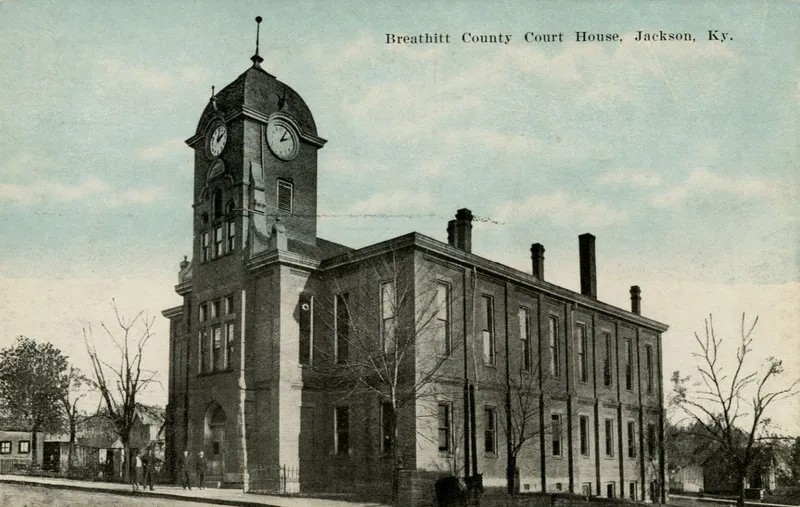
Breathitt County, Kentucky, is a place with a complicated history. By the early 1900s, it had earned the nickname “Bloody Breathitt” for its reputation of violence, political corruption, and feuds. In 1903, the murder of James B. Marcum, a lawyer who challenged the powerful, became a defining moment in the county’s story.
This is not just a tale of a killing. It’s a look at how one murder revealed the deep cracks in a community ruled by fear and power.
A Lawyer Who Took Risks
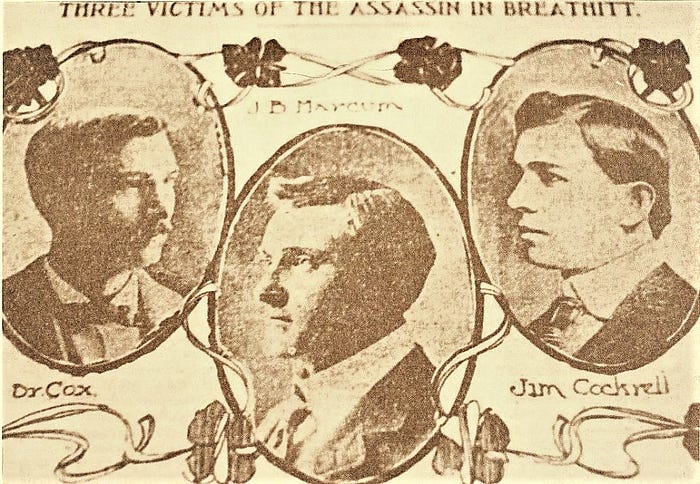
James B. Marcum was a defense attorney in Jackson, Kentucky, the seat of Breathitt County. In a place where political factions settled disputes with guns, Marcum stood out. He represented clients who opposed the Hargis family, a powerful political group that controlled much of the county. The Hargis faction was known for using violence to maintain its grip, and Marcum’s work made him a target.
At the time, Breathitt County was in the middle of a violent feud between the Hargis and Cockrell families. Shootings and assassinations were common, and the courthouse in Jackson was often the backdrop for bloodshed. Marcum knew the risks but continued to take on cases that others wouldn’t touch.
The Killing on the Courthouse Steps
On May 4, 1903, Marcum was walking up the steps of the Breathitt County courthouse when two men, Curtis Jett and Tom White, opened fire. Marcum was shot multiple times and died on the spot. The shooters escaped into the crowd, leaving behind a scene of chaos and fear.
Jett and White were known enforcers for the Hargis faction. Their attack in broad daylight sent a clear message: challenging the powerful came with deadly consequences.
A Trial That Failed to Deliver Justice
The murder of James Marcum shocked the community, but the trial that followed exposed the corruption that ran deep in Breathitt County. Witnesses who had seen the shooting either changed their stories or refused to testify. The defense argued that Marcum had provoked the attack, a claim that didn’t hold up to scrutiny but played well to a jury likely influenced by fear.
In the end, Jett and White were acquitted. The verdict was less about the evidence and more about the power dynamics in the county. The Hargis faction had won again, and the message was clear: crossing them was a death sentence.
The Aftermath
Marcum’s murder didn’t end the violence in Breathitt County. If anything, it reinforced the county’s reputation as a place where justice was hard to come by. The feuds continued, and the name “Bloody Breathitt” stuck.
But over time, the killing of James Marcum became a symbol of the lawlessness that once defined the region. It drew national attention to the corruption and violence in Breathitt County, and eventually, the feuds began to fade.
A Legacy That Lingers
Today, Breathitt County is a quieter place. The courthouse where Marcum was killed still stands, a reminder of a darker time. For those who know the history, it’s a stark example of what happens when power goes unchecked, and justice is out of reach.
The story of James Marcum isn’t just about a murder. It’s about a community’s struggle with its own demons and the slow, difficult path toward change.
-Tim Carmichael
 Echoes of Appalachia
Leave a comment