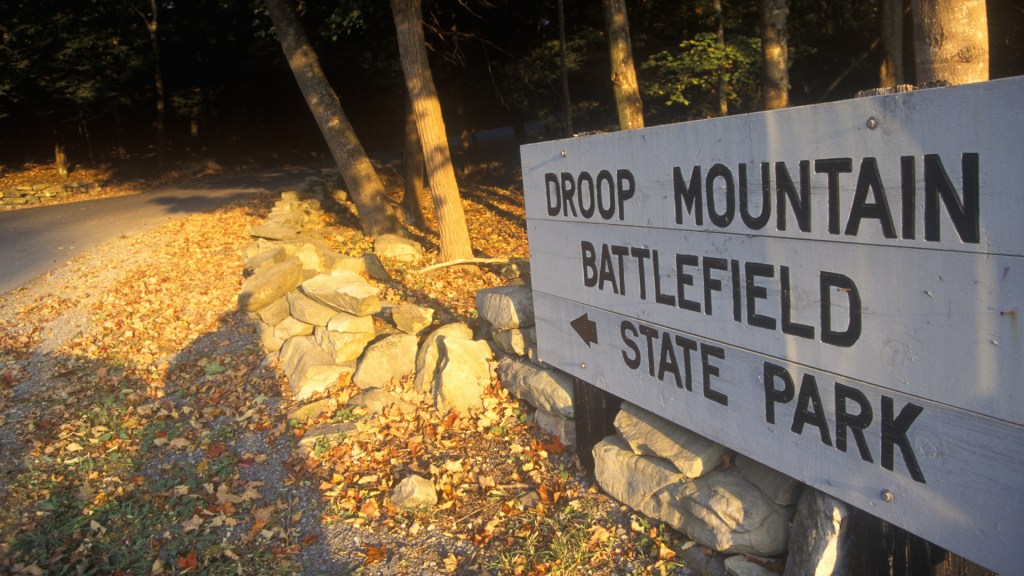
On a summer evening in June 1980, what appeared at first glance to be a couple sharing an intimate moment in West Virginia’s Droop Mountain Park turned out to be a gruesome discovery. A college student stumbled upon the bodies of two women—Vicki Durian (26) and Nancy Santomero (19)—who had been shot at close range and abandoned in a secluded clearing. Medical examiners confirmed neither victim had been sexually assaulted.
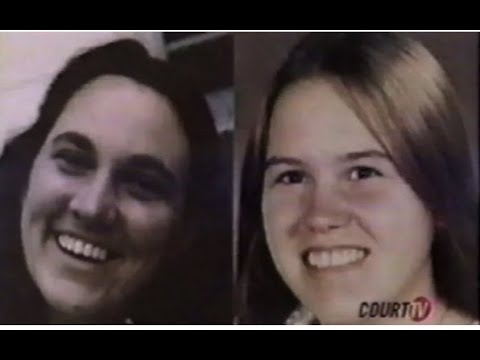
The two women had departed from Iowa City earlier that month with plans to attend the Rainbow Gathering, a counterculture peace festival taking place in Monongahela National Forest. They chose to hitchhike their way there but never reached their destination. These killings, which became known as the “Rainbow Murders,” cast a shadow of fear and suspicion over the local community that persists to this day.
A third traveler, Liz Johndrow, had been journeying with Durian and Santomero but separated from them at a Virginia truck stop the day before the murders. She later explained that an inexplicable feeling of unease prompted her decision to change course, along with news that her father was getting married that weekend. Now in her fifties, Johndrow remembers Durian (whom she knew as “Bright Star”) as a warm, instantly friendly person, while describing Santomero as more serious but curious and adventurous.
Despite thousands attending the Rainbow Gathering, investigators focused on local suspects due to the remote location of the crime scene. The case went cold until 1982 when Jacob Beard, a 36-year-old farmer from the area, drew attention after making several calls to Durian’s parents. Beard claimed he had become preoccupied with the murders after reading a newspaper article about the anniversary of the case. During these calls, one of which was recorded by authorities, he criticized local law enforcement and suggested the FBI should take over the investigation.
Nearly ten years after the killings, in April 1992, Beard and six other local men faced murder charges. Two co-defendants initially identified Beard as the shooter, but accusations of police misconduct during questioning emerged at a pre-trial hearing. Authorities subsequently dropped all charges but later reindicted five men, eventually pursuing charges only against Beard.
The case took an unexpected turn when Joseph Paul Franklin—a convicted serial killer notorious for shooting and paralyzing Hustler magazine publisher Larry Flynt—confessed to the Rainbow Murders in 1984. Franklin later recanted his confession and refused further discussion about the case. The trial judge deemed Franklin’s statement unreliable and prevented its introduction as evidence.
In June 1993, a jury found Beard guilty and sentenced him to life imprisonment without parole. His attorneys continued to fight, presenting both Franklin’s original confession and new testimony placing Beard elsewhere on the day of the murders. In January 1999, the court overturned his conviction and ordered a new trial, which resulted in Beard’s acquittal in May 2000. He later received a $2 million settlement for wrongful conviction.
Many believe the Rainbow Murders case will never be truly solved. The investigation was complicated by apparent friction between local sheriff’s deputies and state police. After more than four decades, this tragic crime continues to haunt the rural Appalachian community where it occurred, leaving lasting trauma not only for the victims’ families but also for locals who were accused, those who investigated the case, and their families.
-Tim Carmichael
 Echoes of Appalachia
Leave a comment