In the aftermath of the 2024 election, the newly empowered Republican government is moving forward with an ambitious budget resolution that proposes significant cuts to federal spending. While budget restraint is often framed as fiscal responsibility, a closer examination reveals a concerning reality: the proposed cuts could disproportionately impact many of the same voters who helped secure Republican victories.
The Numbers Behind the Cuts
The current Republican budget resolution proposes approximately $800 billion in cuts to the Commerce Department, which plays a crucial role in administering Medicaid programs, and another $250 billion in cuts to the Agriculture Department, which oversees the Supplemental Nutrition Assistance Program (SNAP), commonly known as food stamps.
These aren’t just abstract numbers on a spreadsheet. They represent real resources that millions of Americans — particularly those in economically challenged regions — depend on for healthcare and food security.
Red State Reliance
What makes these proposed cuts particularly notable is the demographic reality of who benefits from these programs. In many Republican-dominated states, especially across the Appalachian region and rural America, there is significant reliance on these social safety net programs:
- In states like Kentucky, West Virginia, and Mississippi, between one-third and one-fifth of residents receive Medicaid benefits
- SNAP participation rates in many red states significantly exceed the national average
- The Appalachian region, which has consistently voted Republican for decades, has some of the highest participation rates in both programs
This creates a paradoxical situation where the representatives elected by these communities are proposing policies that could directly impact their constituents’ access to healthcare and food assistance.
The Economics of Distraction
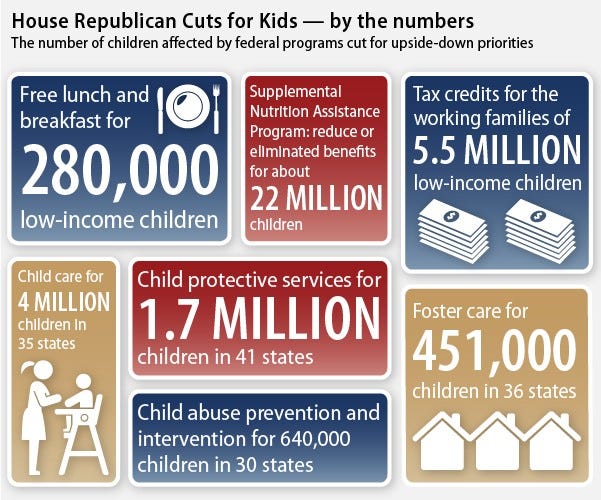
The budget resolution aims to find approximately $900 billion in savings, which critics argue will primarily fund tax cuts that disproportionately benefit wealthier Americans. This raises important questions about priorities and representation.
Political strategists have noted a persistent pattern where economic anxieties in struggling regions are often channeled toward cultural issues rather than policy discussions about programs that directly impact daily life. The resulting voting patterns sometimes create situations where communities elect representatives whose economic policies may work against local interests.
The Appalachian Example
The Appalachian region serves as a particularly illustrative example of this dynamic. Despite decades of Republican representation at various levels of government, the region continues to face significant economic challenges, including:
- Persistently high poverty rates
- Limited economic diversification following the decline of coal and manufacturing
- Health outcomes that lag behind national averages
- High rates of dependence on federal assistance programs
Yet political messaging in the region often focuses on cultural identity and opposition to “outside” influences rather than the concrete impacts of policy decisions on local communities.
Beyond the Budget Numbers
The debate around these budget cuts goes beyond simple accounting. It touches on fundamental questions about governance, representation, and the role of government in supporting vulnerable communities.
For many families in economically challenged regions, programs like Medicaid and SNAP represent not handouts but essential support systems that help them weather economic transitions and hardships that are often beyond individual control.
Looking Forward
As this budget resolution moves through the legislative process, it remains to be seen whether constituent concerns about potential cuts to these programs will influence the final outcome. The tension between fiscal conservatism and the practical needs of many Republican-voting communities presents both a challenge and an opportunity for more nuanced policy conversations.
What’s clear is that the impacts of these proposed cuts would not be limited to Democratic-leaning urban areas. They would be felt deeply in the rural communities and small towns that have become the backbone of Republican electoral success.
Perhaps the most productive path forward lies not in partisan positioning but in developing budget approaches that recognize the complex needs of all American communities — including those whose votes helped shape the current political landscape.
-Tim Carmichael
 Echoes of Appalachia
Leave a comment