
Mary Harris Jones was born in County Cork, Ireland, in 1830. But her journey—one that would change the course of American labor history—began far from the Emerald Isle. After a life marked by personal loss, deep convictions, and a commitment to the working class, she became a powerful force in the fight for workers’ rights across the United States. Today, she is known as “Mother Jones,” a title earned through years of fighting for the downtrodden and oppressed.

In 1861, Mary moved to Memphis, where she married George Jones, an ironworker who was a strong supporter of labor unions. Together, they raised several children, but tragedy struck in 1867 when yellow fever claimed the lives of her husband and children. Devastated but not defeated, Mary Jones found purpose in advocating for the rights of workers, particularly those in industries where workers faced unsafe conditions, low wages, and long hours.
Jones became a tireless ally of labor movements across the country. She joined the Knights of Labor, a group dedicated to improving the conditions of workers, and began traveling to strike sites to offer her support. In 1873, she journeyed to Pennsylvania to assist coal miners who were fighting for better wages and safer working conditions. A few years later, she went to the railroads in 1877 to stand alongside striking workers. Everywhere she went, Jones was known for her impassioned speeches and unshakable commitment to justice. Her ability to speak directly to the hearts of workers earned her the affectionate nickname “Mother.”

But her work didn’t stop there. As one of the most outspoken labor activists of her time, Jones became a central figure in the United Mine Workers Union, advocating fiercely for miners’ rights. Her progressive views extended beyond labor disputes. In 1898, she helped establish the Social Democratic Party, pushing for political change to benefit working-class Americans. Then, in 1905, she helped create the Industrial Workers of the World (IWW), a union dedicated to organizing all workers regardless of their occupation.
Despite her growing influence, Jones was seen as a threat by the authorities. In fact, she was labeled one of the most dangerous women in America. Yet, that label never stopped her. When she was arrested at the age of 82 for her involvement in a violent strike in West Virginia, she refused to back down. She was sentenced to 20 years in prison, but after a wave of public support and petitions from her admirers, the governor granted her a pardon. True to form, Mother Jones didn’t retreat; she returned to organizing, always fighting for those who had no voice.
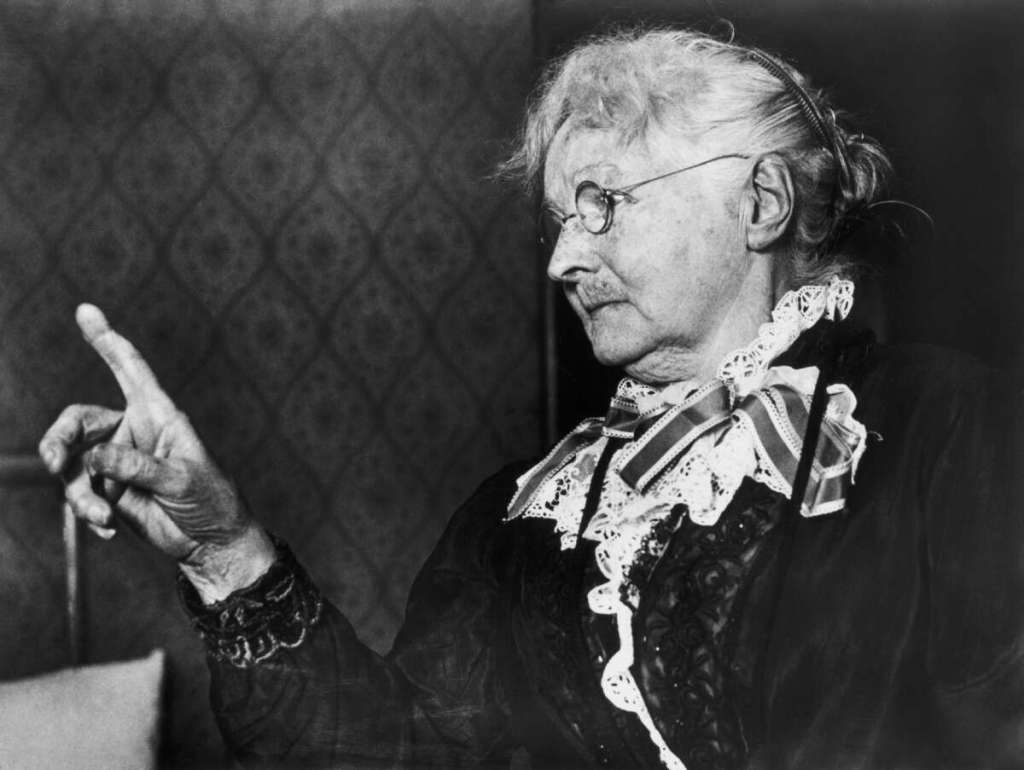
In addition to advocating for miners, Jones became a passionate crusader against child labor. In 1903, she led a historic march from the textile mills of Philadelphia to New York City, a journey of hundreds of miles with 100 children in tow. The children were protesting the grueling hours they were forced to work in the mills, and Jones hoped the march would draw attention to the injustice. When they reached President Theodore Roosevelt’s estate on Long Island, they had one message: The millionaires of New York needed to see the reality of child labor.
Even in her later years, Mother Jones remained an unwavering presence in the labor movement. In 1921, she settled near Washington, D.C., but continued to travel the country in support of workers. The final chapter of her activism came in 1924 when, even as her hands had grown weak with age, she made her last appearance at a strike in Chicago to support dressmakers who were fighting for fair wages. By the time of her death in 1930 at the age of 100, Jones had become a symbol of the unrelenting spirit of the American labor movement.
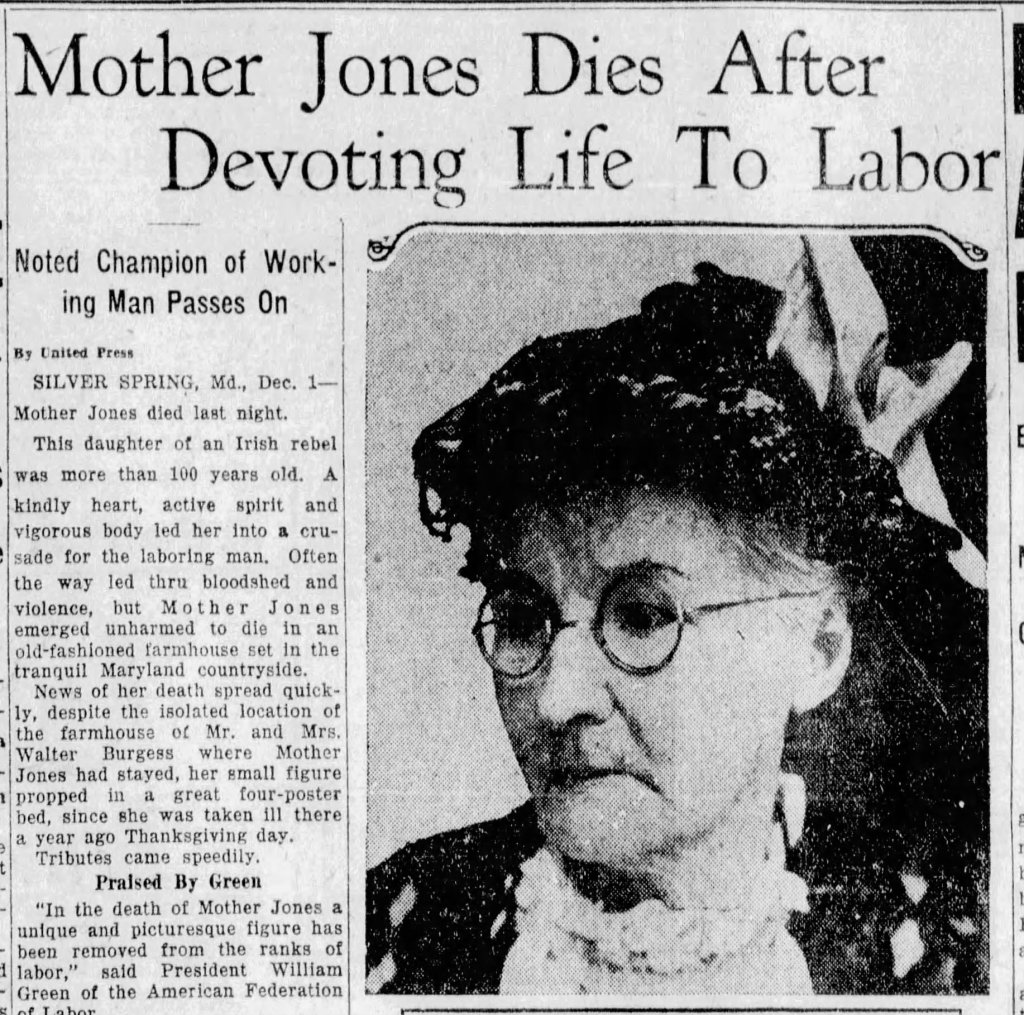
She was buried in the Union Miners Cemetery in Mount Olive, Illinois, a fitting resting place for a woman whose life’s work had been to fight for the dignity and rights of workers across the nation. Today, her legacy endures as a testament to the power of one determined individual to spark change, no matter the obstacles. Mother Jones may have been a woman of small stature, but her impact was nothing short of monumental.
-Tim Carmichael
 Echoes of Appalachia
Leave a comment