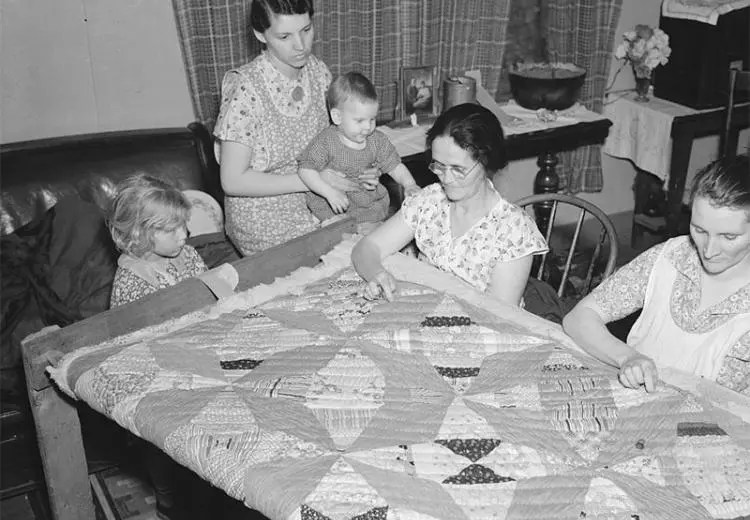
For the women of Appalachia, quilting is more than just a skill—it’s a way to keep the past alive, hold on to family memories, and create something both beautiful and practical. In the mountain communities, quilts weren’t just blankets; they were pieces of a larger story.
From an early age, girls sat with their grandmothers, mothers, and aunts, learning how to stitch, tie knots, and select fabrics for quilts that would be passed down through the years. It wasn’t just about making something to cover the bed—it was about learning the art of crafting something from nothing, of making do with what you had, and of carrying forward a practice that had been a part of Appalachian life for generations.


Learning the Craft Early
Quilting in these mountain homes was not something that could be picked up overnight. By the time girls were old enough to sit at their grandmothers’ feet, they were already threading needles and helping with simple tasks like picking out fabric scraps or tying off loose threads. Quilting wasn’t seen as a chore but as an essential part of growing up, a way to join the ranks of the women who had stitched their lives into these beautiful creations.
The process wasn’t quick. Quilting took time—weeks, months, sometimes longer—but the women didn’t mind. There were no fancy tools or machines involved, just steady hands working with what was available. Scraps of old shirts, faded dresses, and worn sheets became the building blocks of something that would last. Nothing was wasted. Even the smallest scrap of fabric had its place in the quilt’s design.
The patterns, too, held significance. Some were passed down through the years, while others were born from the imagination of the quilter. Popular designs like “Grandma’s Garden” and “Log Cabin” became staples of many homes, each square telling a piece of a larger story.
Quilting as a Social Event
While quilting was about skill, it was also about bringing people together. In the mountains, women would gather in each other’s homes to stitch together, sometimes working on the same quilt, other times starting new projects. These quilting bees weren’t just about making progress on the quilts; they were about community. As the needles moved in unison, the room filled with laughter, stories, and sometimes even tears. The younger girls listened intently, learning not just about quilting but about life and family.
The slow pace of quilting gave space for conversation. There was no rush to finish. A quilt could take as long as it needed, and in that time, bonds were made, advice was shared, and memories were relived. Women worked together without hurry, knowing that the end result would be worth the time invested.

A Tradition That Lives On
Today, many of the quilts crafted in these Appalachian homes have become family treasures. Some are displayed in museums or preserved in heirloom boxes, but the tradition of quilting continues. Women of all ages still gather to sew, sharing the same stories and skills that have been passed down. The quilts that are made today are as much about honoring the past as they are about creating something new.
These quilts are more than just blankets. They are reminders of the women who made them, of the patience and care that went into every stitch, and of the stories told while working. They reflect a time when creativity grew from necessity, and when women worked together to make their homes a little warmer, a little more inviting.
In Appalachia, quilting is not just a skill; it’s a living practice, shaped by the hands of women who have kept it alive for generations. It’s a legacy woven together in every stitch, preserving the memories of the past while creating new ones for the future.
-Tim Carmichael
 Echoes of Appalachia
Leave a comment