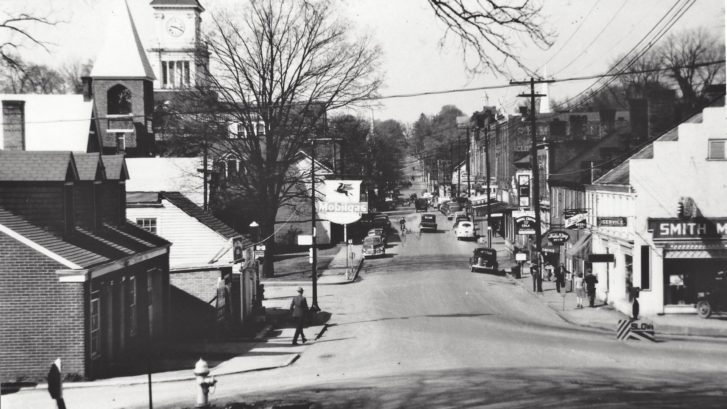
Jonesborough, Tennessee, holds the distinction of being the first town in what would later become the state of Tennessee. Founded in 1779 by settlers from the Watauga Association, it has a deep historical significance that stretches back to the early days of American frontier life. This small town is a repository of stories about struggle, self-governance, and the spirit of early settlers in the Appalachian region.
When it was founded, the area was part of North Carolina, and settlers in the region were navigating life on the edge of the frontier. The town was named after Willie Jones, a prominent North Carolina statesman who supported the settlers in their push for greater autonomy. The town’s founding occurred against the backdrop of the American Revolution, and the settlers in Jonesborough were already embroiled in efforts to carve out their own path away from the colonial powers.
One of the defining moments in Jonesborough’s history came in the 1780s, when the region played a central role in the creation of the state of Franklin. In the wake of the Revolutionary War, the settlers in what is now East Tennessee were dissatisfied with North Carolina’s rule and sought to establish their own state. Jonesborough became the capital of the short-lived State of Franklin, a bold experiment in self-governance that sought to create an independent state between North Carolina and Virginia.
The State of Franklin, which existed from 1784 to 1789, was ultimately unsuccessful in its bid for independence. After a series of political and military struggles, the state was dissolved, and the region returned to North Carolina’s control. However, the movement helped lay the groundwork for the eventual statehood of Tennessee, which was admitted to the Union in 1796.
Jonesborough’s role in the formation of Tennessee didn’t stop with the dissolution of the State of Franklin. The town continued to serve as an important political and economic hub in the region. In 1790, it became home to the first post office in Tennessee, marking a significant development in the communication and transportation networks of the time. This helped connect the isolated frontier communities with the rest of the young United States and allowed for the exchange of goods, ideas, and news.
In addition to its role in early statecraft, Jonesborough also gained recognition for its place in the cultural history of the Appalachian region. The town’s preservation of historic buildings and landmarks reflects a larger effort to retain the character and heritage of early frontier life. Among its many historical buildings is the Chester Inn, which dates back to 1797 and once served as a meeting place for important figures in early Tennessee history.
As the 19th century progressed, Jonesborough saw both growth and decline, much like other small towns in the Appalachian region. The town remained a focal point for its surrounding communities, with local farmers, merchants, and artisans contributing to its economy. However, as railroads and industrialization took hold elsewhere, Jonesborough’s prominence in the state gradually diminished. Still, the town’s historical core remained intact, serving as a reminder of the complex origins of the state.
Today, Jonesborough stands as a testament to Tennessee’s early days, where the struggles for independence and self-determination shaped the course of the region’s future. Its historical buildings and landmarks continue to tell the story of a mountain town that was once at the heart of political and social change. While much of its role in shaping Tennessee’s history may no longer be widely known, Jonesborough’s contributions remain an essential chapter in the story of the state’s founding and early development.
-Tim Carmichael
 Echoes of Appalachia
Leave a comment