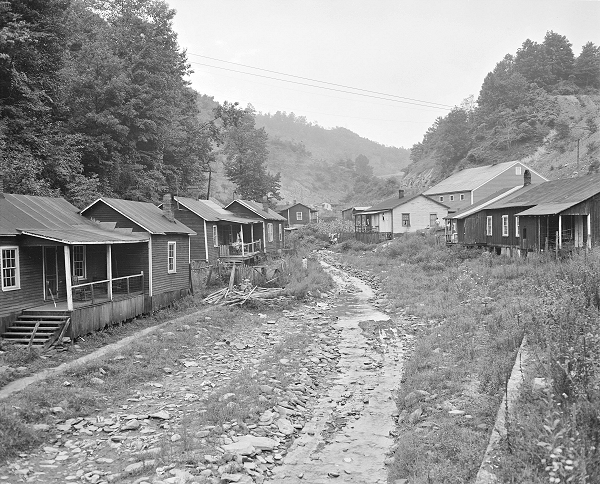
Nestled within the heart of Kentucky, West Virginia, and other parts of the Appalachian region, coal camps were an integral part of the coal mining industry’s rise in the early 20th century. By the 1940s, these coal camps had become both symbols of economic opportunity and living conditions that were a stark contrast to the promises they once held.
Coal had been the backbone of Appalachia’s economy for decades, and with the growth of the industry came a complex and often exploitative system that defined the lives of thousands of miners and their families. By the time the 1940s rolled around, these coal camps were an entrenched part of the Appalachian landscape, shaping the lives of workers in ways that would echo for generations.
The Rise of the Coal Camps
The coal camps in Appalachia were established by large mining companies in the late 19th and early 20th centuries. These camps were meant to house miners and their families near the coal mines where they worked. The idea was simple: provide workers with housing, basic amenities, and stores that were controlled by the company. In return, the company controlled nearly every aspect of the workers’ lives, from their wages to the goods they could purchase.
By the 1940s, the coal camps were a well-established part of life in Appalachia. Coal companies built these camps to house the influx of workers needed to extract the region’s vast coal reserves. These communities were often isolated, located in remote areas far from city centers, and were built to facilitate the operation of the mines.
Company Towns: A Double-Edged Sword
On one hand, coal camps offered employment during the Great Depression and a sense of stability to miners and their families. Jobs in the coal mines, although dangerous and grueling, provided steady paychecks at a time when the nation was grappling with economic turmoil. However, these jobs came at a cost. Coal mining was known for its perilous working conditions, and the pay was often far less than what miners deserved for the grueling labor they performed.
Coal miners often found themselves living in company-owned houses, which were typically small, cramped, and poorly maintained. Rent for these houses was deducted directly from their wages, often leaving miners in a cycle of debt to the company. Many workers were paid in “scrip,” a form of company-issued currency that could only be used in the company store. This left miners and their families dependent on the company for their daily needs, and prices in the company store were notoriously high.
These coal camps were, in many ways, a form of economic and social control. The companies had complete authority over the workers’ lives, from housing and food to the very money they earned. While the 1940s saw some improvement in the quality of life in some camps, the fundamental exploitative nature of company towns remained largely unchanged.
Living in the Shadows of Industry
For the people who lived in these coal camps, life was difficult and often harsh. The work in the mines was dangerous, with frequent accidents and fatalities. Lung disease, such as black lung, was rampant among miners due to the exposure to coal dust. The work hours were long, with miners often toiling for 10 to 12 hours a day, six days a week.
Housing was often overcrowded, with many families living in small, poorly constructed homes. These homes were sometimes little more than rudimentary shacks made of wood or tar paper, offering minimal insulation from the harsh Appalachian winters or the stifling heat in the summer. Many camps lacked basic sanitation, with no indoor plumbing or running water in some cases. Families often had to rely on communal water sources, which were shared by many people in close quarters.
Despite these hardships, the coal camps were home to tight-knit communities. Workers and their families often formed strong social bonds, organizing social events, churches, and schools. These communities, although poor, were often rich in cultural traditions, with music, storytelling, and local folklore playing an important role in daily life.
The Labor Struggles
The 1940s were a period of significant labor unrest in the coalfields of Appalachia. Miners were increasingly aware of their poor living and working conditions, and many began to demand better wages, working conditions, and rights. This period saw the rise of labor unions in Appalachia, with the United Mine Workers of America (UMWA) becoming a powerful force.
Unionization efforts, however, were met with strong resistance from coal companies, who used a combination of intimidation, violence, and even company-sponsored militias to maintain control. The 1920s and 1930s had seen bloody coal strikes, and by the 1940s, tensions remained high. Some coal camps were sites of violent clashes between striking miners and company security forces.
Despite the challenges, the labor movements of the 1940s would ultimately lead to significant gains for workers in the decades to come, including better wages, improved working conditions, and more influence for labor unions. However, these advances did not erase the enduring legacies of the coal camp system.
The Decline of the Coal Camps
The 1940s also marked the beginning of changes that would lead to the eventual decline of many coal camps. Advances in mining technology, such as the use of machinery to replace manual labor, meant that fewer workers were needed. In addition, the increasing mechanization of the coal industry made company-controlled communities less necessary.
As the mines began to close down or become less profitable, many families were forced to leave the coal camps in search of work elsewhere. In some cases, entire communities were abandoned, leaving behind ghost towns as reminders of the once-thriving coal industry.
Legacy of the Coal Camps
The coal camps of the 1940s in Appalachia are a reflection of the region’s history. On one hand, they represent the harsh realities of industrial labor, exploitation, and the sacrifice of workers for the advancement of an industry that fueled the nation’s growth. On the other hand, the coal camps are also a reminder of the resilience of the people who lived and worked in these communities, often fighting for their rights and creating vibrant cultures in the face of adversity.
Today, the legacy of the coal camps can still be seen in Appalachia. The region continues to grapple with the economic and environmental effects of the coal industry, even as the last of the coal mines close. The memories of the coal camps, both the struggles and the sense of community, remain an important part of Appalachia’s identity.
While the coal camps may be a thing of the past, the stories of the miners who lived there continue to echo in the hills and hollows of Appalachia, reminding us of a time when coal was king, and those who worked to bring it to the surface paid the price for progress.
-Tim Carmichael

 Echoes of Appalachia
Leave a comment