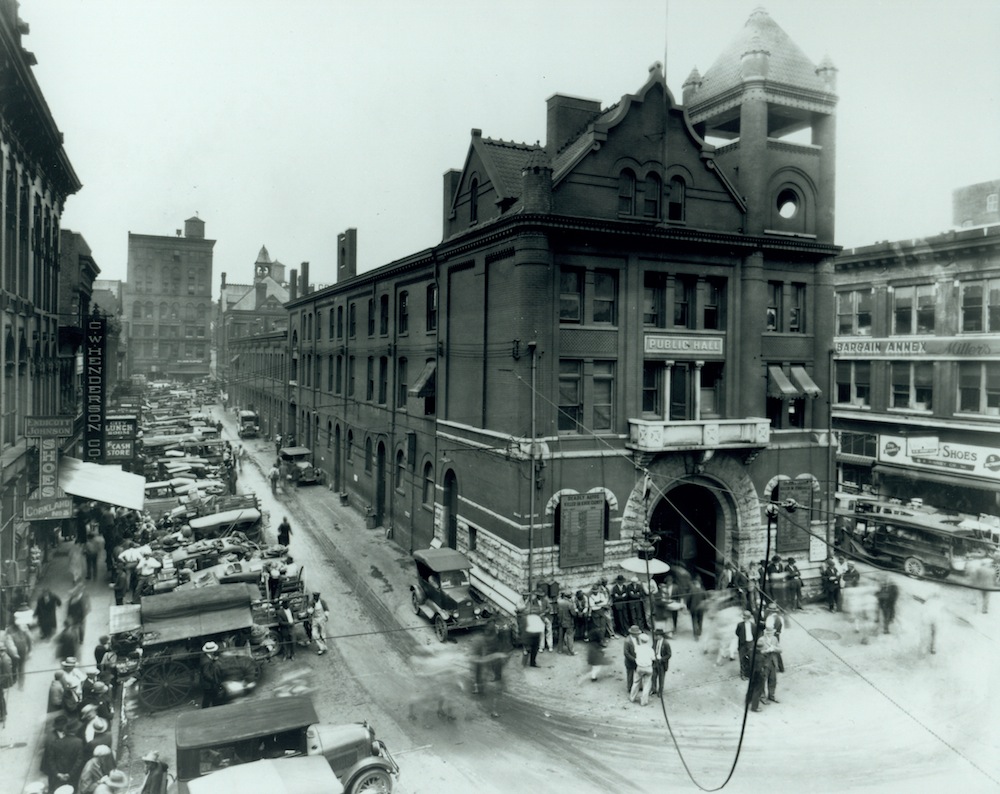
Nestled in the foothills of the Great Smoky Mountains, Knoxville, Tennessee, is a city that beautifully blends natural beauty with deep historical roots. Known today as a thriving cultural hub and a gateway to outdoor adventures, Knoxville has a rich history that includes a pivotal moment in Tennessee’s early years when it served as the state capital.
Early Beginnings: The Founding of Knoxville
The history of Knoxville dates back to the late 18th century when it was established in 1786. Initially founded by James White, a Revolutionary War veteran, Knoxville quickly became an important settlement due to its strategic location on the Tennessee River. Its early residents were a mix of pioneers, soldiers, and traders looking to build a future in what was then the frontier of America.
In the late 18th century, Knoxville’s location on the river and its proximity to the Appalachian Mountains made it an ideal crossroads for travelers, traders, and settlers heading westward. The settlement grew rapidly, and by the early 1790s, it was already gaining recognition as a key town in the region.
Knoxville Becomes the First Capital of Tennessee
As Tennessee prepared for statehood in the late 18th century, the location of its capital became a crucial issue. In 1796, when Tennessee officially became the 16th state in the Union, Knoxville was chosen as its first capital. This decision was based largely on its geographical location—close to the middle of the state and accessible by river, which made it a natural meeting point for lawmakers and citizens from across the region.
Knoxville served as the capital of Tennessee from 1796 to 1812. During this time, the city was the center of political and governmental activity, and several significant events took place there. The state’s first constitution was drafted, and early lawmakers convened in Knoxville to shape the future of the fledgling state.
Transition to Nashville
In 1812, the Tennessee legislature decided to move the state capital to Nashville, a city that offered greater security and a more central location in relation to the rest of the state. The decision to relocate the capital was largely influenced by concerns about Knoxville’s vulnerability to attack, as it was closer to the border with the hostile Cherokee Nation and other Native American groups. Additionally, Nashville had grown rapidly and was positioned on the Cumberland River, which was becoming an increasingly important transportation route.
Despite this move, Knoxville remained a key city in Tennessee’s development, serving as a hub for business, trade, and education. It continued to grow in importance over the years, thanks to its central location in the eastern part of the state and its proximity to important roads and rail lines.
Knoxville’s Role in the 19th and 20th Centuries
Though no longer the state capital, Knoxville remained a vibrant and important city in Tennessee. During the 19th and early 20th centuries, the city saw growth in industries like railroads, iron, and coal. The establishment of the University of Tennessee in 1794 helped ensure the city’s role as an educational and intellectual center.
Knoxville also played a significant role during the Civil War. While Tennessee was a Confederate state, Knoxville was a contested city, with both Union and Confederate forces occupying it at different times. The Battle of Fort Sanders, fought in November 1863, was a key event during the Civil War, and it marked one of the most important Union victories in the state.
In the 20th century, Knoxville continued to grow, particularly after World War II, with major developments in infrastructure, business, and education. The city hosted the 1982 World’s Fair, a significant milestone that helped modernize its downtown area and brought global attention to the city. Today, Knoxville is known for its vibrant cultural scene, historic architecture, and proximity to natural wonders like the Great Smoky Mountains National Park.
Knoxville Today: A City of Tradition and Progress
Today, Knoxville is a city that honors its rich history while embracing progress. Although it no longer serves as the state capital, Knoxville remains one of Tennessee’s most significant cities, with a population of over 190,000 residents. It is home to the University of Tennessee, which has a major influence on the city’s economy, culture, and identity.
The city is known for its historic landmarks, including the Tennessee Theatre, the Old City District, and the Blount Mansion—where Tennessee’s first state constitution was signed. Knoxville’s proximity to the Smoky Mountains also makes it a popular destination for outdoor enthusiasts, offering hiking, boating, and exploring in one of the country’s most visited national parks.
Knoxville’s role in Tennessee’s history, especially as the first capital, continues to be a source of pride for its residents. The city’s legacy as a political and cultural center lives on through its vibrant communities, its historic sites, and its ongoing commitment to growth and development.
Knoxville’s history is a fascinating tale of early American expansion, political significance, and cultural evolution. As the first capital of Tennessee, it played a key role in the state’s formation and early development. Though Nashville may have taken over the mantle of state capital, Knoxville’s legacy continues to shape the history of Tennessee and the United States. Today, it stands as a testament to the spirit of the people who helped build it—a city proud of its past, present, and future.
-Tim Carmichael
 Echoes of Appalachia
Leave a comment