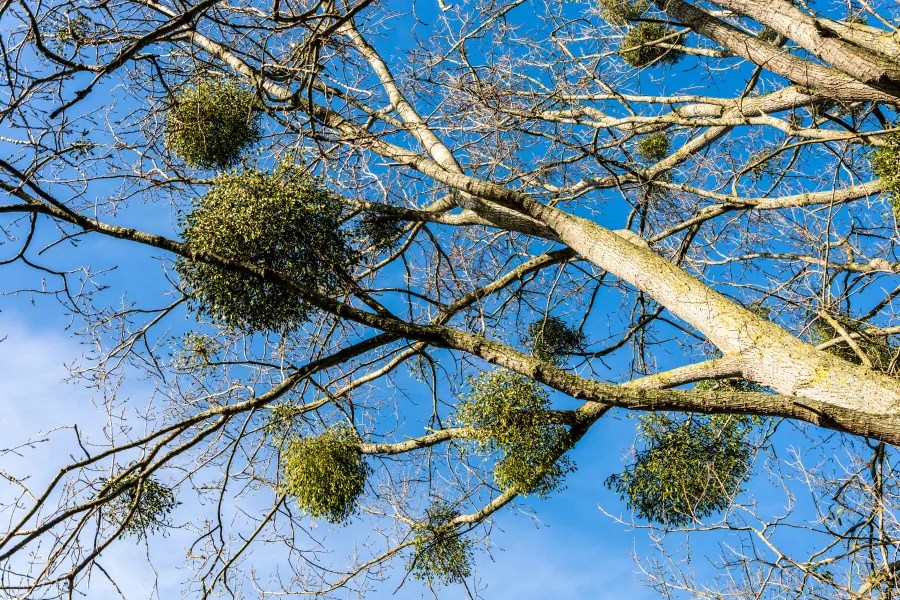
Mistletoe, with its glossy green leaves and white berries, is a prominent feature in the Appalachian landscape during the winter months. Although not native to the region, this evergreen plant has become a well-known presence in the Appalachian forests. Mistletoe thrives on hardwood trees like oaks, maples, and hickories, growing high in the treetops where it is often hard to reach.
The plant likely made its way to Appalachia with European settlers who brought their own customs and plants with them. Mistletoe was known for its role in European folklore, often seen as a symbol of luck and fertility. As settlers moved west, they carried the plant with them, and over time it found a place in the rich ecosystem of the Appalachian mountains.
In Appalachia, mistletoe is mostly found in the higher branches of trees, where it parasitically attaches itself and draws nutrients from its host. Despite this, it rarely harms the trees. The plant’s evergreen nature allows it to remain visible throughout the winter, standing out against the otherwise bare branches of deciduous trees. Its bright green leaves and white berries make it easily recognizable, particularly during the colder months when the rest of the foliage has faded.
For many in Appalachia, the hunt for mistletoe is part of the winter routine. People who know the local forests can spot the plant growing high in the trees, often requiring a long pole or a climb to collect it. Once gathered, mistletoe is used in various ways, typically as decoration. The plant can be hung above doorways, placed on mantels, or displayed in other parts of the home, adding a natural touch to the indoor environment during the holiday season.
While mistletoe’s presence in Appalachia is often associated with the winter holidays, it is also part of the broader natural landscape of the region. It thrives in the Appalachian climate, surviving through cold winters when many other plants die back. Its green foliage and distinctive berries add a unique element to the otherwise quiet and barren winter woods.
The spread of mistletoe in Appalachia is a reflection of both the adaptability of the plant and the way it has been incorporated into the landscape over time. Its growth has become an ordinary sight in the region, and its use during the winter months continues to be a familiar part of the Appalachian environment.
-Tim Carmichael
 Echoes of Appalachia
Leave a comment