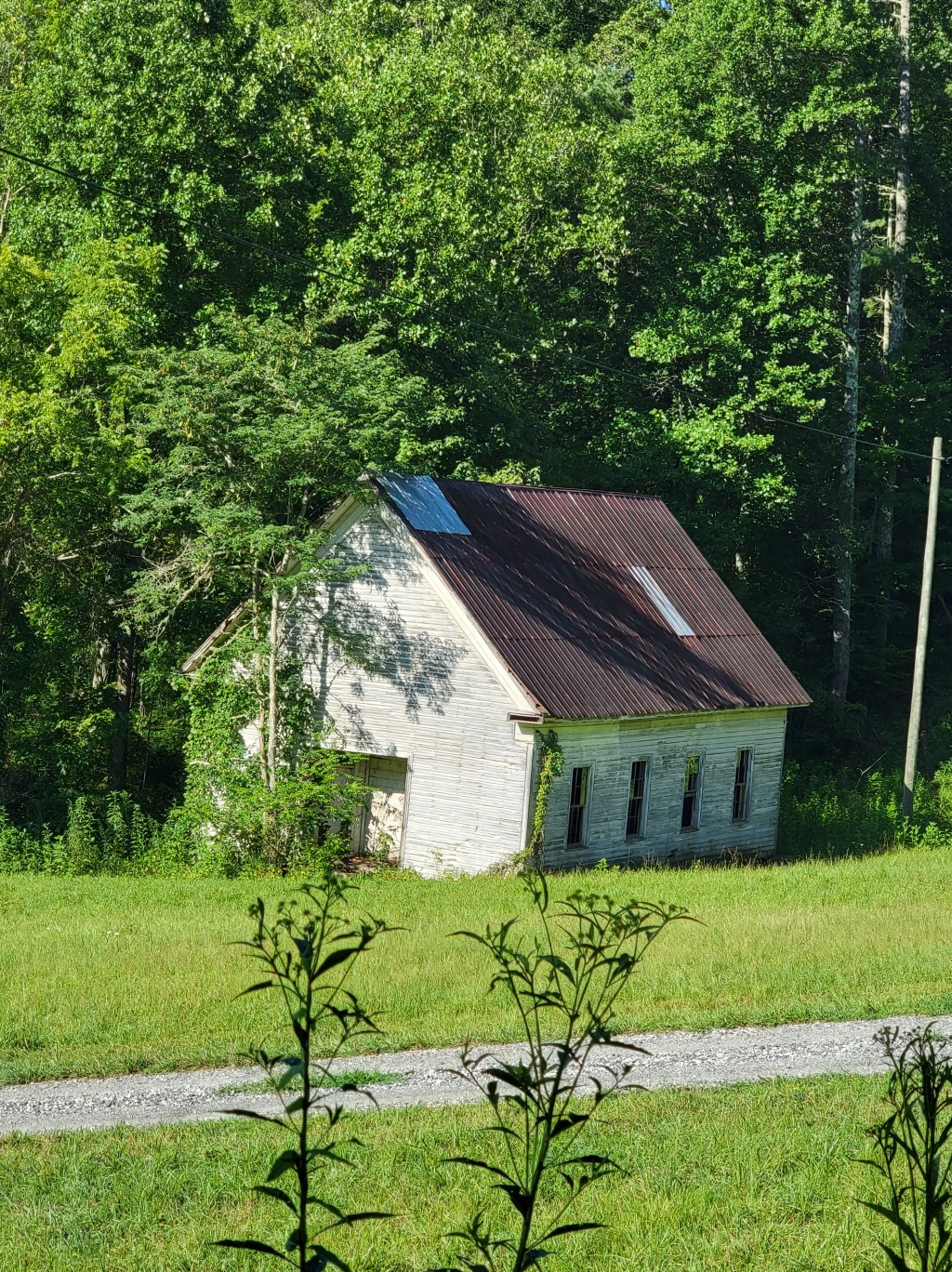
When I share stories about growing up in the mountains of Western North Carolina, people often look at me like I’m telling a tale from the 1800s. It’s hard to believe, but in many ways, life in that small community, a community called Spillcorn tucked away in the Appalachian Mountains was like living in a whole different world. For most of my childhood, we didn’t have electricity or indoor plumbing. It wasn’t until the early 1980s that those things made their way to our home.
Our house was small—just a little three-room house—and it didn’t have the comforts that most people take for granted today. We didn’t know what it was like to flip a switch and have light, or to turn on a faucet and have running water. We had to make do. And for us, it was just life.
Our days started early, just like any child’s day does. The sun hadn’t even fully risen when we climbed out of bed to begin the routine. First, we had to catch the bus for school. The bus ride was long—about an hour on rough, winding mountain dirt roads. It gave me time to watch the mist rise off the hills, the trees standing still and tall as the world woke up. By the time we reached school, our stomachs were growling, and we usually ate breakfast and lunch at school.
But there was no real resting after school. Our real work began when we got home. There were chores to do—always chores. I spent a lot of time chopping wood for the cookstove, gathering eggs from the hens, and cleaning the pigpen. We didn’t have much, but we all worked together to make sure we had enough. No one complained because we all had our part to do.
If we wanted a little extra spending money, we didn’t have an allowance. Instead, we would walk the roads, collecting empty Coke bottles. Back then, you could return a bottle for 10 cents. Ten bottles were enough to buy a treat for my brother, my two sisters, and me—usually a little candy or maybe a soda. That small reward felt like a big deal, because we didn’t have much else. I remember the excitement of turning in those bottles and getting enough money to buy something sweet. It was a tiny thing, but it made us feel rich, if only for a moment.
When we were young, we didn’t realize we were poor. Everyone around us was in the same boat. Our neighbors were like family. We all lived the same way, shared the same struggles, and celebrated the same small joys. And there was a feeling of togetherness that is hard to explain. When someone in the community passed away, we all pitched in to help. The men would dig the grave, and the women would help get the house ready for the wake. It was a bond that ran deep—one that kept everyone strong, even when times were tough.
The best part of our days was visiting Granny. She lived just a short walk down the road from us, a 30-minute trek. The walk wasn’t a chore; it was something we looked forward to. Granny’s house was a world of its own. She had one of those old wood cookstoves, the kind with warmers on top, and she always kept a batch of bacon, sausage, and biscuits in the warmer.
Granny was always busy working on her quilts. She’d sit at her quilting frame, needle and thread in hand, stitching together patterns that were so beautiful they could have been displayed in a museum. Her quilts were more than just blankets—they were pieces of art, made with love and patience.
Life wasn’t easy, though. The nearest grocery store was about an hour away in Marshall, and we didn’t have a car of our own. So, we had to hire someone to take us to town for groceries, which was only once a month. That meant waiting for a ride, packing up what we needed, and then making the long drive to stock up on supplies. If someone got sick, a trip to the hospital could take even longer. We had to drive to Asheville, NC or sometimes to Greeneville, TN. The distance made you realize just how isolated we were.
When I think back on those days, I can’t help but wonder how my mother did it. How did she make sure we had everything we needed, how did she keep the house running with so little? But somehow, she did it. She worked hard, always behind the scenes, always making sure we were okay. I think about her every day, even though it’s been nearly 17 years since she passed. I still thank her in my heart for everything she did—for us, for our family. It’s remarkable how many memories come flooding back when you get older.
Looking back, I realize that those years in the mountains shaped me in ways I never fully understood until now. Life in those mountains wasn’t easy, but it was real. We lived simply, we worked hard, and we loved fiercely. There wasn’t much to our world in terms of material things, but there was so much more than that. We had family, community, and the land itself, which gave us what we needed to survive.
People often ask me what it was like growing up poor, and I tell them it was hard. But it was also beautiful. It was a life full of love, of hard work, and of a bond that held us all together. And those memories, those moments, will always be a part of who I am. Even as time goes on, I’ll never forget the old wood cookstove at Granny’s house or the smell of biscuits in the oven. Those simple pleasures are what made our world rich, and that’s something no one can ever take away.
-Tim Carmichael
 Echoes of Appalachia
Leave a comment