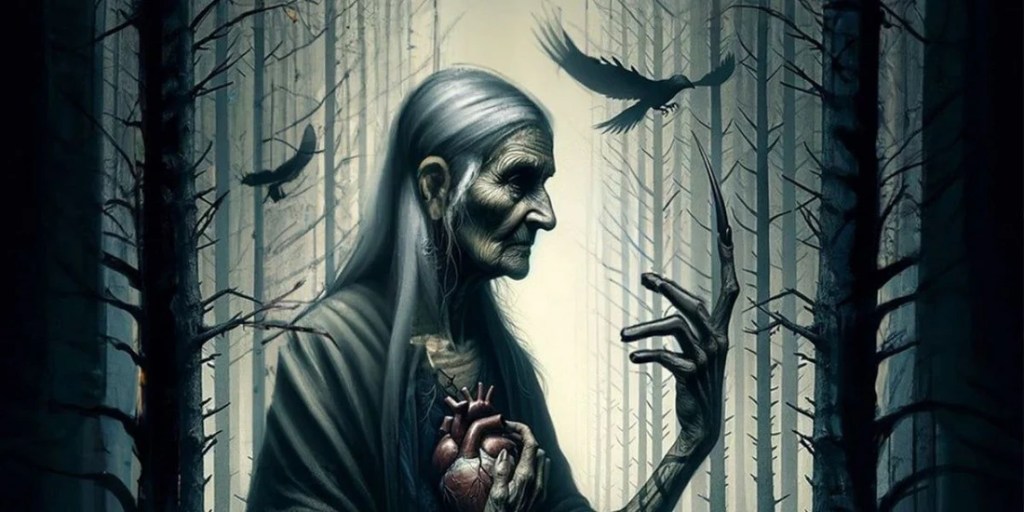
In the heart of the Appalachian Mountains, where misty valleys and dense forests weave tales of ancient folklore, one story stands out for its chilling depth: the legend of Spearfinger. This Cherokee myth serves as both a cautionary tale and a glimpse into the rich tapestry of indigenous storytelling, reminding us of the dangers that lurk in the shadows and the importance of heeding warnings from our elders.
Spearfinger, known in Cherokee as “Utsidihi,” is often depicted as a fearsome witch with skin as hard as stone. The lore describes her as a shapeshifter, capable of transforming into an old woman to lure unsuspecting children. In her benign form, she would appear as a kind and nurturing grandmother, using her guise to earn the trust of her young victims. However, beneath this facade lies her true nature—a malevolent spirit with a single, deadly weapon: a long, sharp finger, often referred to as her “spear finger.”
The crux of Spearfinger’s legend lies in her deceptive nature. She would approach children with warmth and familiarity, whispering promises of love and comfort. This ability to assume a nurturing form resonates with the universal theme of trusting appearances, a reminder that not everything is as it seems. As she would gain the trust of her young victims, the moment of betrayal would arrive. With a swift and deadly motion, she would use her spear finger to strike, taking the lives of those she had lured in. This theme of deception serves as a profound lesson in vigilance, especially for children. In a world where not all smiles are sincere, the story of Spearfinger underscores the importance of discernment and the wisdom passed down through generations.
Spearfinger is more than just a tale of horror; she embodies the fears and teachings of the Cherokee people. Her legend is interwoven with lessons about respect for nature, the dangers of straying too far from home, and the critical importance of listening to elders. In a time when the world is rife with unseen threats, the story of Spearfinger reminds us of the need to be aware of our surroundings and the potential dangers hidden beneath seemingly harmless facades. Moreover, Spearfinger represents the duality of nature—both nurturing and destructive. Just as the mountains can provide shelter and sustenance, they can also harbor threats. This duality reflects the Cherokee worldview, where balance and respect for both the benevolent and malevolent aspects of nature are paramount.
In recent years, the tale of Spearfinger has transcended its origins, appearing in various forms of popular culture, from literature to film. These adaptations often play on the psychological elements of fear and trust, reimagining the legend for contemporary audiences while retaining its core warnings. The eerie imagery of a seemingly sweet old woman with a deadly secret continues to captivate and terrify, proving that some legends endure through time, adapting to new contexts while maintaining their powerful messages.
The legend of Spearfinger is a haunting reminder of the complexities of trust and deception. As children hear tales of this fearsome witch, they are not only entertained but also taught vital life lessons about discernment and caution. Spearfinger remains a significant figure in Cherokee folklore, representing the interplay between light and darkness, and the enduring power of storytelling in shaping cultural values. In a world that often seems chaotic and unpredictable, the stories of our ancestors remind us to stay vigilant, to question appearances, and to honor the wisdom that has been passed down through generations. As we navigate our own lives, perhaps it’s worth remembering that the real monsters may not be as far away as we think—sometimes, they’re just a smile away.
-Tim Carmichael
 Echoes of Appalachia
Leave a comment