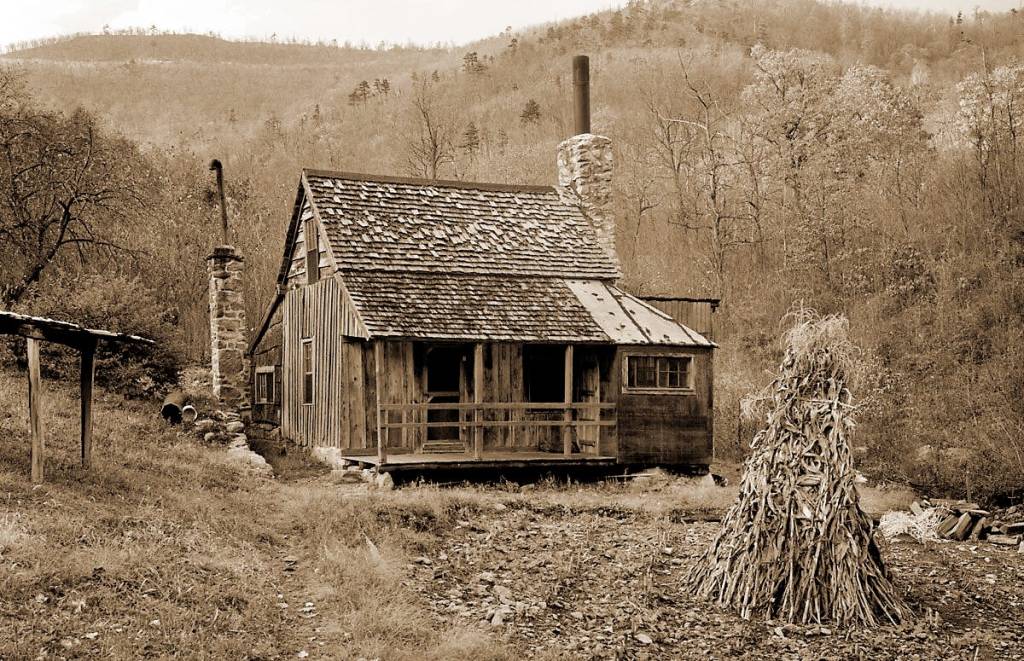
There is a unique beauty in growing up in a small house nestled deep in a holler, where the mountains surround you like a sheltering embrace and the quiet is so profound, it feels like part of you. At night, the stillness was almost sacred. Through the thin walls, the soft chorus of crickets could be heard, blending with the wind as it rustled the trees. Those nights felt infinite, cradled in a calm that made the world beyond seem distant and unimportant. Lying in bed, listening to the sounds of the night, you felt a safety that only the mountains could offer.
Summers in the holler were nothing short of magical. As the day faded, the field outside our home would come alive with the glow of lightning bugs, their soft lights flickering against the dark like stars brought to earth. We would run barefoot through the grass, catching them in jars, trying to capture a piece of that fleeting light. We didn’t have much in the way of toys, but the fields, the trees, and the laughter we shared were more than enough. We spent hours playing hide-and-seek in the open fields, or climbing up to the rafters of the old barn, jumping into piles of hay with the boundless joy that only children know.
But as magical as summer was, winter brought its own challenges. The cold in the holler wasn’t just something you felt on the surface; it settled deep into your bones. Our home wasn’t built to withstand the harsh mountain winters, and my mother worked tirelessly to keep the cold at bay. She would cover the windows with plastic to block out the draft, and even line the walls with old newspapers, hoping to hold in what little warmth we had. On the coldest nights, she stayed awake by the fire, feeding it carefully, ensuring it wouldn’t die out. I still remember how exhausted she looked in the morning, having slept only a few moments at a time. But that was how much she loved us—her tired eyes and worn-out body were a testament to the sacrifices she made.
Food was often scarce, especially during the winter months. When there wasn’t enough to go around, my mother would quietly nibble at her plate, insisting she wasn’t hungry, just so the rest of us could eat. At the time, I didn’t fully understand what she was doing, but now, looking back, I realize the depth of her love and sacrifice. Even when she was cold and hungry, she always put us first, ensuring we never felt the full weight of the hardship we were living through.
Hiking in the mountains wasn’t just a way to pass the time—it was how we survived. With a cast iron frying pan, a small ball of twine, and a handful of matches, we would venture into the woods, hunting for ramps and potatoes, sometimes lucky enough to catch something more. Cooking over an open fire, surrounded by the towering trees and the crisp mountain air, made every simple meal feel like a feast. The smell of ramps and potatoes frying in fatback grease still lingers in my memory, a reminder of those days when the land provided what little we had. The food was humble, but it tasted of the mountains, of survival, of a connection to the earth that ran deeper than we knew.
Mornings in the winter were particularly hard. Often, we’d wake to find snow on the covers where the wind had blown the plastic loose during the night. The fire would have gone out, leaving the house so cold you could see your breath hanging in the air. We’d huddle together under a heavy feather bed, trying to keep each other warm. It wasn’t the easiest life, but we made it work, and much of that was thanks to my mother. Her strength held us together, even on the hardest days.
Most people will never know what it’s like to grow up that way, to wake up in a house so cold that the walls seemed to shiver with you. They won’t know the quiet joy of catching fireflies in the summer, or the smell of ramps cooking over a fire. They won’t understand the quiet sacrifices of a mother who stayed awake to keep the fire going or gave up her food so her children could eat. But for those of us who did live that life, it shaped us in ways that are hard to put into words. The mountains taught us resilience, but more than that, they taught us gratitude—for each meal, for each warm night, for each quiet moment spent together.
The holler gave us more than just a place to live—it gave us a sense of belonging, a peace that only comes from living so close to the land. It was a life of simplicity and hardship, but also one of deep love and connection. That life is something that never leaves you, no matter how far you go. It stays with you, reminding you of what truly matters: family, sacrifice, and the quiet strength that comes from enduring together.
Most people will never experience that kind of life, but for those of us who did, it’s a part of us forever. We may not have had much, but in those moments, in that place, we had everything we needed. And that is a kind of richness that can never be measured by wealth or possessions, but by the love and sacrifice that held us together through it all.
-Tim Carmichael
 Echoes of Appalachia
Leave a comment