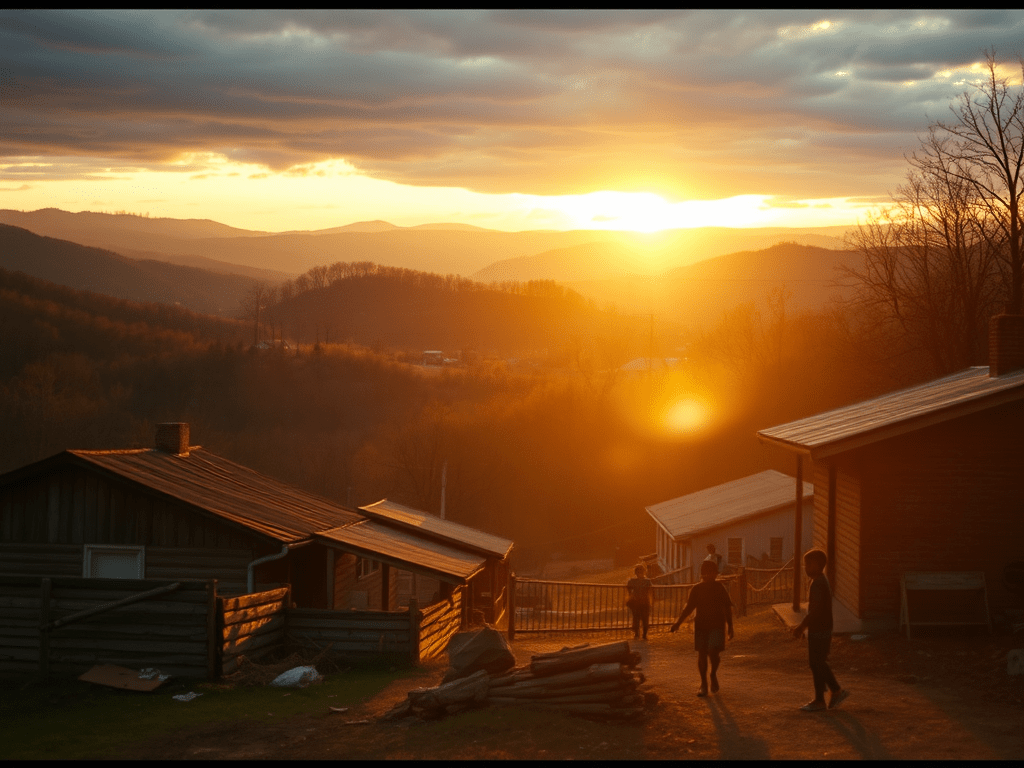
If you’ve ever been to Appalachia, you know it’s a place of breathtaking beauty. The mountains, the valleys, the sense of being connected to something deeper—it’s a place that gets into your bones. But there’s another side to this region, a side that doesn’t get talked about as much. Appalachia is also a place where poverty runs deep, affecting families, children, and entire communities.
For generations, folks have been making do with what they have, surviving in these mountains through hard times. I grew up seeing it firsthand. While my family managed to get by, not everyone around us was so lucky. Some of you might have memories like mine—kids at school with shoes that barely held together, clothes that had seen too many winters. I’ll never forget how some of my friends would scarf down their free lunch at school like it was the only meal they’d get that day.
How We Got Here
The story of poverty in Appalachia is complicated, but it didn’t happen overnight. Back when coal mining and logging were booming, this region had its share of work. It wasn’t easy work—far from it—but it was steady. But then the mines began to close, factories moved away, and jobs dried up. Suddenly, whole communities were left with little to hold onto. And let me tell you, when jobs go, everything else follows. Schools, healthcare, small businesses—everything gets hit hard.
The Struggles of Today
Even now, things haven’t gotten much better for many families in Appalachia. Some counties have poverty rates as high as 30%, and healthcare and job opportunities are scarce. Addiction—especially to opioids—has only made things worse. The land may be beautiful, but life for a lot of folks here is anything but.
In some of the hollers, it can feel like the outside world has forgotten about us. Houses are falling apart, and too many families rely on government assistance just to make ends meet. But the hardest thing to see is the children who grow up thinking this is normal—like struggling is just part of life.
Strength in Community
But if there’s one thing I’ve learned, it’s that the people of Appalachia are tough. We’re survivors. When times are hard, we take care of each other. When someone’s out of work, neighbors step in. If a family doesn’t have food, the community finds a way to get them through. It’s not charity—it’s just how we do things around here.
Churches and local groups are the lifeline for so many families. Food pantries, clothing drives, and Christmas toy giveaways—these small acts of kindness make a big difference. I’ve seen it with my own eyes. When there’s not much to go around, people share what little they have.
A Way Forward
Here’s the thing: people in Appalachia don’t want handouts. We want opportunities. We need better access to education, healthcare, and good-paying jobs. With the right investment, the people of this region could thrive. We don’t need someone to come in and “fix” us—we need the tools to build something better for ourselves.
Appalachia is a place that’s been through a lot, but it’s also a place with a lot of heart. We’ve survived through generations of hardship, and with a little help, we’ll keep going strong. Thanks for listening and for caring about this special place. Together, we can make sure these mountains continue to echo with stories of community, and hope.
 Echoes of Appalachia
Leave a comment