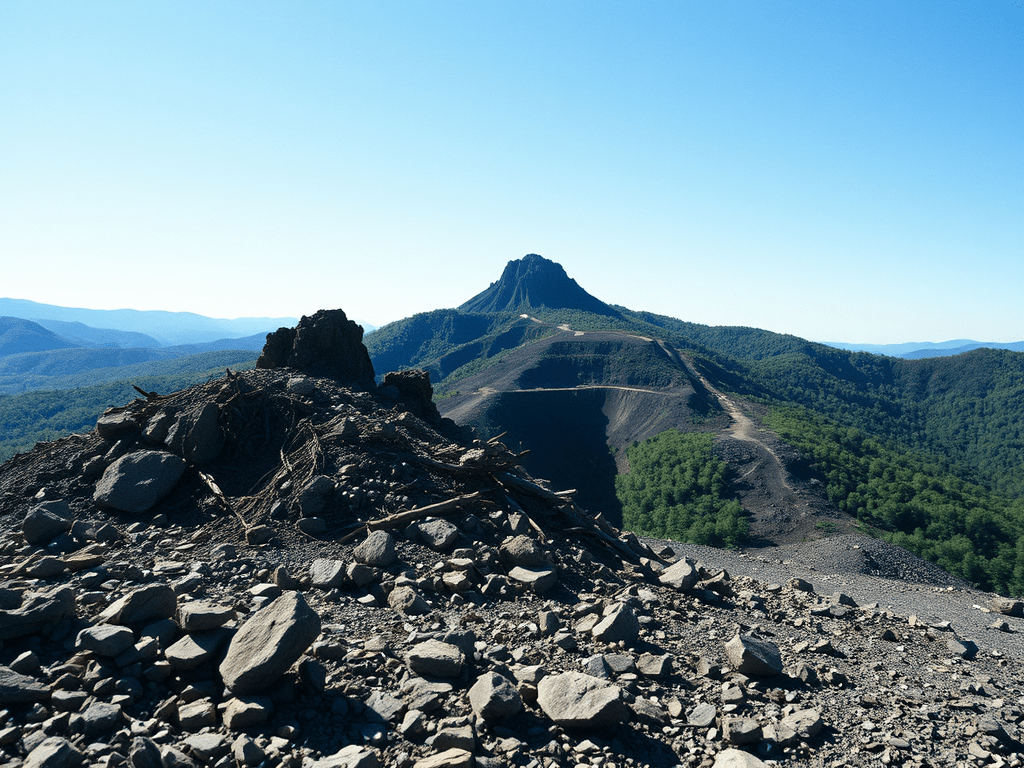
Mountaintop removal is a radical form of coal mining in which the tops of mountains are literally blasted off to access seams of coal. It takes place in the Appalachian Mountains, one of the oldest mountain ranges on earth. Mountaintop removal (MTR) is a form of coal mining that, quite literally, changes the face of the Appalachian Mountains. These ancient mountains, which have stood tall for hundreds of millions of years, are blasted apart to extract seams of coal buried beneath their peaks. The environmental, cultural, and human costs of this process are staggering, and the impacts are felt most deeply by the people who have called Appalachia home for generations.
What is Mountaintop Removal?
Mountaintop removal is exactly what it sounds like: entire mountaintops are blasted away with explosives to expose coal seams. Once the mountains are leveled, giant machines—often called draglines—scoop up the coal and the leftover rock is dumped into nearby valleys. This method is favored by coal companies because it allows them to extract coal quickly and cheaply. But the real cost of this so-called “efficiency” is paid by the environment and the Appalachian communities.
The Environmental Devastation
The environmental destruction caused by MTR is hard to overstate. When a mountain’s peak is removed, it disrupts the ecosystem that has developed there over many, many years. Streams are buried under rubble, wildlife habitats are destroyed, and forests that once covered these highlands are reduced to barren wastelands.
One of the most troubling effects of MTR is the contamination of water supplies. The valleys where the leftover debris—known as “overburden”—is dumped often contain streams that are the lifeblood of rural communities. These streams become filled with toxic chemicals, including heavy metals like arsenic and mercury, leached from the mining waste. Many residents living near MTR sites report increased health problems, from respiratory issues to higher rates of cancer, linked to the pollution of their air and water.
A Cultural Loss
For the people of Appalachia, the mountains are more than just land; they are a symbol of endurance, strength, and heritage. Families like my own, who grew up hiking through these mountains, harvesting their medicinal plants like ginseng and jewelweed, feel the loss of every peak that is blasted away. These mountains have sheltered communities for generations, providing food, water, and livelihoods.
With each mountain lost to removal, a piece of the region’s cultural fabric is torn away. It’s hard to imagine the Smoky Mountains or the highlands of North Carolina and Virginia without their peaks. For many in Appalachia, watching these mountains be destroyed feels personal—like losing an old friend.
The Human Cost
While coal companies promise jobs and economic development, the reality for many is quite different. The jobs provided by MTR are fewer than those offered by traditional underground mining, as machines replace much of the human labor. When the coal is gone, the companies often leave, and what remains is a landscape that can no longer support farming, forestry, or tourism.
Appalachian communities are left to deal with the fallout—literally. The health risks from air and water pollution caused by MTR are well-documented, and the destruction of the landscape makes it difficult for the local economy to recover. Entire towns are sometimes displaced, with families forced to leave the land they have lived on for generations because it is no longer safe or sustainable.
Looking Toward the Future
Appalachia is a region defined by its resilience. The people who live here have endured countless hardships, from the collapse of the coal industry to the destruction caused by mountaintop removal. But they continue to fight for the protection of their mountains and their way of life.
There is a growing movement across Appalachia to put an end to MTR and to find new, sustainable ways to create jobs and build economic opportunity without destroying the environment. Renewable energy, conservation, and tourism are all paths that could offer a brighter future for the region. But this will require a commitment from both local and national leaders to invest in these alternatives and to recognize the true cost of MTR—not just in dollars, but in the loss of land, culture, and health.
The Appalachian Mountains have stood for hundreds of millions of years. It is up to us to ensure that they continue to stand for generations to come.
If you’re interested in learning more about how to help preserve the Appalachian Mountains and support sustainable efforts in the region, consider getting involved with local environmental groups or spreading awareness about the dangers of mountaintop removal. Every voice makes a difference in the fight to protect these ancient peaks.
 Echoes of Appalachia
Leave a comment